About us
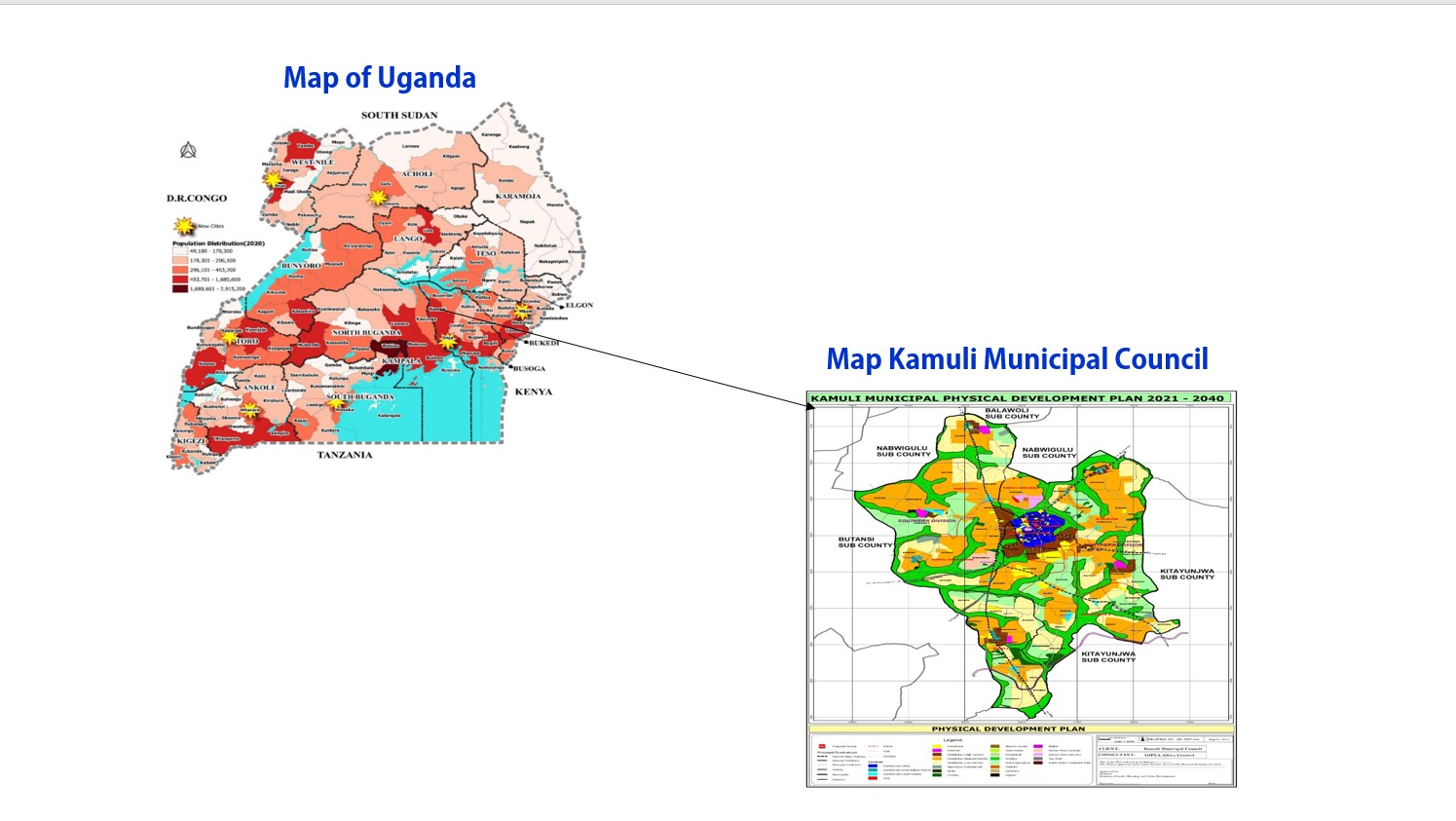
Kamuli Municipal Council is one of the urban administrative units within Kamuli District, located in the Busoga Sub-Region of Eastern Uganda. The Municipality lies approximately 140 kilometers northeast of Kampala City and is bordered by Bugabula County in all directions. It covers a total area of about 102.65 square kilometers and is situated at an altitude of approximately 1,083 meters above sea level.
Key Aspects of Kamuli Municipality:
- Location: Situated in the Busoga sub-region, accessible via an all-weather tarmac road from Jinja.
- Administration: Divided into two divisions—Northern Division and Southern Division. It operates under the Kamuli District Local Government framework.
- Development & Infrastructure: The municipality is benefiting from the World Bank-funded USMID Project, with, for example, over 12 billion shillings slated for infrastructure improvements.
- Economy: The economy is heavily reliant on agriculture, with crops including rice, matooke, maize, coffee, and sugarcane, according to Kamuli District Local Government.
- Public Services: Key infrastructure includes schools (e.g., Namujenjera and Bulemezi Primary Schools).
- Recent Developments: The municipality is actively improving its administrative infrastructure, including resuming construction of a three-story office complex to enhance service delivery.
For detailed administrative and census data, the UBOS Dissemination Portal provides information on the area.
MUNICIPALITY VISION AND MISSION
Vision is: “A well planned and inclusive self-sustaining urban community by 2040”
Mission is: “To serve the community through coordinated delivery of services which focus on national and local priorities and contribute to the improvement in the quality of life”
Core Values:
The implementation of Kamuli Municipality’s development agenda is guided by a set of core values that reflect its commitment to good governance, effective service delivery, and community empowerment. These values shape institutional behavior and interactions with citizens, partners, and stakeholders. They include:
- Transparency: Commitment to openness in decision-making, information sharing, and service delivery to build public trust and confidence.
- Integrity: Upholding high moral and ethical standards in all actions to promote honesty, fairness, and professionalism.
- Accountability: Taking responsibility for decisions, actions, and use of public resources to ensure efficiency and trustworthiness.
- Responsiveness: Ensuring timely and effective delivery of services and addressing community needs with empathy and urgency.
- Inclusiveness: Promoting equal participation and representation of all groups, including women, youth, and vulnerable populations, in development processes.
Geographical Location, Land Area, and Population Geographical Location
Kamuli Municipal Council is a Local Council IV in Kamuli District which is located in South-Eastern Uganda (Busoga Sub-Region), about 140km from Kampala, lying at an average altitude of 1,083M above sea level and extends from 00 – 56’ North / 330 – 05’ East up to 010 – 20’ North / 330 – 15’ East. The Municipality serves as the administrative and commercial hub of Kamuli District. It borders Kitayunjwa Sub-county to the North, Namasagali to the West, Bulopa to the South, and Nabwigulu to the East. It has a total area of 102.65 sq. km. Land Area
Kamuli Municipality covers an estimated 102.65 square kilometers, making it one of the smaller urban authorities compared to municipalities like Jinja or Mbale. It is divided into two administrative Divisions-Northern and Southern Divisions. Northern division has a total land area of 52.40km2 while Southern division has a total land area of 50.25 km2
Population
Profile Population Size
Based on UBOS 2024 mid-year projections, Kamuli Municipal Council has a population of approximately 76,758 people, with an almost equal male-to-female ratio. This includes about 35,194 males and 41,564 females.
Population Growth Rate
Kamuli Municipality is experiencing a population growth rate of 3.2%, higher than the national average, primarily due to rural-urban migration and natural growth.
Population Density
The average population density is about 2,345 persons per square kilometer, concentrated more in trading centers like Buwanume, Namisambya II, and Busota.